
Optometry clinic · Plateau Mont-Royal, Montreal
Pink eye and red eye: symptoms, treatment and when to see someone
Pink eye (conjunctivitis) is inflammation of the thin layer that covers the white of the eye. Most often viral, sometimes bacterial or allergic. Viral pink eye clears up on its own, usually in one to three weeks. But a red eye can also come from something more serious, like a corneal infection or a glaucoma attack: only an eye exam can tell you what you have.
Red eye has many possible causes, some minor and some urgent, including episcleritis, scleritis, uveitis (iritis), keratitis, corneal ulcer, subconjunctival hemorrhage and acute angle-closure glaucoma, among others. They can look similar but need very different care, so an accurate diagnosis is critical. Optometrists in Quebec are authorized to examine and diagnose red eyes and treat many of them. If advanced care is needed, we manage the referral to the right specialist. Don't try to diagnose it yourself: many types of red eye look alike but are treated very differently. See an eye care professional.
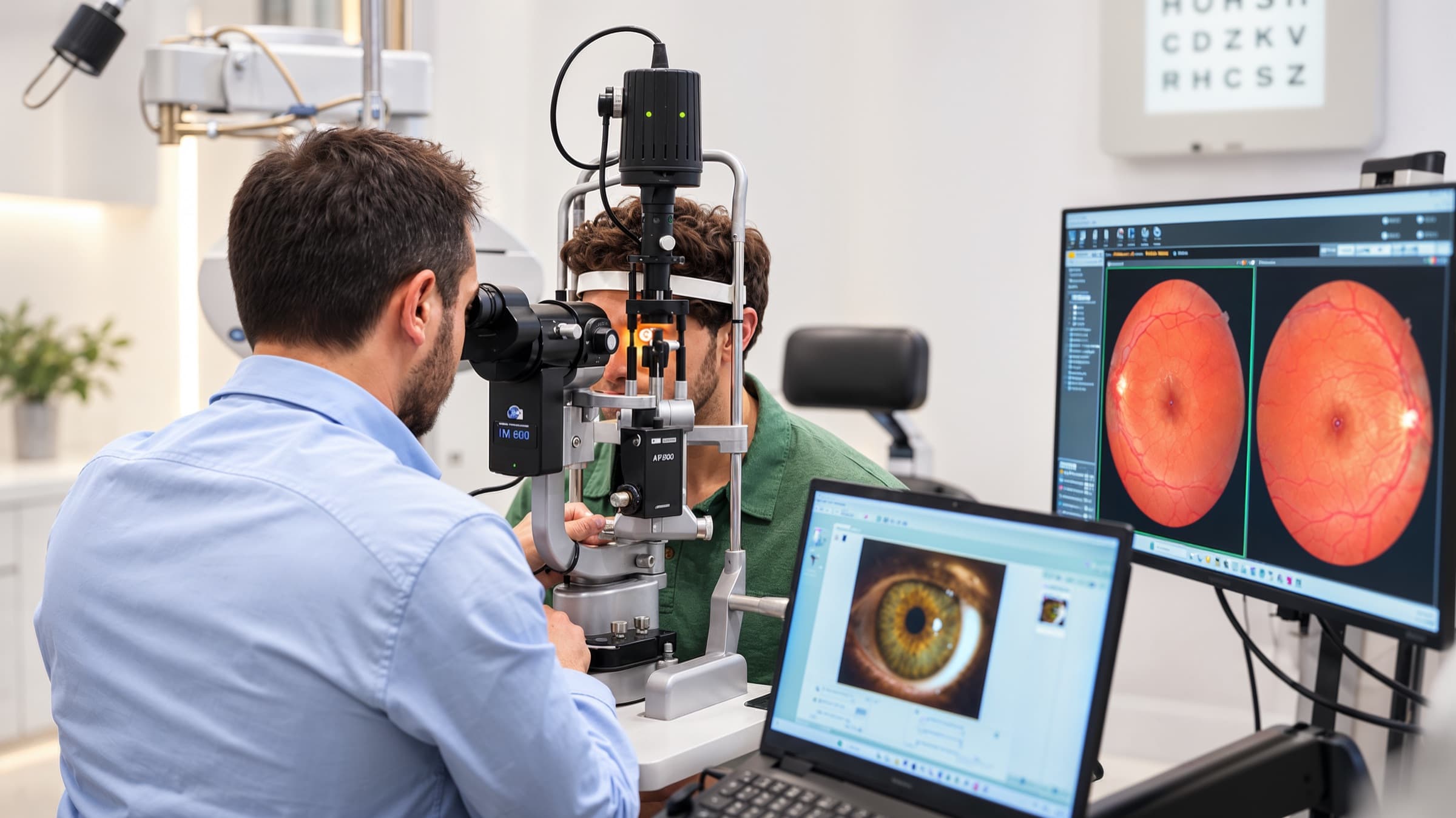
Need your eye checked?
Walk-in visits.
Call us before you come in to be seen quickly, often the same day.
Thorough exam.
We examine your eye to find the cause of the redness.
Treatment and follow-up.
If treatment is needed, we explain your options and plan your follow-up.

Near Sherbrooke and Saint-Laurent stations. Harry Toulch Optometrists, 3750 Saint-Laurent Blvd., corner of Pine Avenue.
Red eye: when to see a doctor right away
Hospital ER
Go straight to the hospital emergency department
If you have any of these signs:
- Sudden loss of vision
- Severe pain with headache, nausea or halos around lights
- An injury that pierced the eye, a hard blow, or a high-speed fragment (grinder, metal)
- Chemical in the eye: rinse with water for 15 minutes, then go to the emergency department
This list is not exhaustive. When in doubt, call 811 (Info-Santé) or go to the emergency department.
Walk-in optometry clinic
Get your eye checked quickly
Call us if you have any of these signs:
- Mild to moderate pain in the eye
- Irritation
- Light sensitivity
- Blurry vision that doesn't clear when you blink
- You wear contact lenses and your eye is red or sore
Call before you come in so we can see you quickly, often the same day.
Pink eye symptoms
Symptoms often start in one eye, then reach the other a few days later. Vision usually stays normal, which is one of the signs that sets pink eye apart from more serious problems.
Pink or red eye
The redness covers the white of the eye and the inside of the eyelid, unlike a simple, sharply defined patch of blood.
Discharge or watery eye
Clear discharge points to a virus or an allergy. Thick yellow or greenish discharge points to bacteria.
Eyelids stuck together in the morning
Crusts form overnight, especially with the bacterial kind.
Gritty or foreign-body feeling
The eye feels irritated, as if a speck of dust were stuck in it, without significant pain.
Intense itching
When itching is the main symptom and both eyes are affected at once, an allergy is the most likely cause.
Swollen eyelids
Mostly with the viral or allergic kind. With the viral kind, often alongside a cold or a sore throat, and sometimes a swollen gland in front of the ear on the same side: it's a normal reaction to the virus.
Viral, bacterial or allergic: the differences
The three kinds look alike, but they aren't treated the same way. Antibiotic drops do nothing against a virus or an allergy.
| Type | Typical signs | Contagious? | Usual duration |
|---|---|---|---|
| Viral | Typical signsClear discharge, one eye then the other, often during or after a cold. The most common kind. | Contagious?Yes, very. As long as the eye is red and watery, often 10 to 14 days. | Usual duration1 to 3 weeks. It clears up on its own. |
| Bacterial | Typical signsThick yellow or greenish discharge, eyelids stuck shut in the morning. More common in children. | Contagious?Yes. Until about 24 hours after starting antibiotic drops. | Usual durationIt varies a lot depending on the bacteria. Some cases respond quickly to antibiotic drops, others need stronger treatment and close follow-up. |
| Allergic | Typical signsBoth eyes at once, strong itching, watering, puffy eyelids. Triggered by pollen, pets or dust. | Contagious?No. | Usual durationIt depends. In most cases, it clears up once you remove what triggers it. |
It might not be pink eye
Many things can make an eye red. Some are harmless, others threaten your sight. Here are the ones we see most often, and how they differ. This list is not exhaustive.
Often harmless
- Pain: none
- Vision: normal
Burst blood vessel (subconjunctival hemorrhage)
A sharply defined, bright red patch on the white of the eye, with no pain or discharge, often after straining, coughing or sneezing. It fades on its own in one to two weeks. Get it checked if it follows an injury, if it keeps coming back or if you take blood thinners (medication that thins the blood).
Worth getting checked
- Pain: mild
- Vision: varies
Dry eye
Burning, a sandy feeling and mild redness in both eyes, worse at the end of the day or in front of a screen. Vision can blur and then clear when you blink. It can come and go, and if it persists, it deserves a proper assessment.
Worth getting checked
- Pain: possible
- Vision: normal
Stye or chalazion
A small bump on the eyelid: red and tender at the base of a lash for a stye, firmer and often painless for a chalazion. The redness stays on the eyelid, not on the white of the eye.
Worth getting checked
- Pain: mild
- Vision: normal
Blepharitis (inflamed eyelid margins)
Red, irritated, greasy or flaky eyelid margins. It irritates the eye for weeks and often comes back without regular eyelid cleaning.
Get seen the same day
- Pain: yes
- Vision: blurry
Uveitis (inflammation inside the eye)
Deep pain, strong light sensitivity, blurry vision and a ring of redness around the iris, the coloured part of the eye. Without prompt treatment, it can leave lasting damage.
Get seen the same day
- Pain: sharp
- Vision: often blurry
Keratitis or corneal ulcer
Sharp pain, like something stuck in the eye, watering, light sensitivity, sometimes a small white spot on the eye. The risk is much higher for contact lens wearers: take them out and call us.
Get seen the same day
- Pain: possible
- Vision: may blur
Herpes simplex eye infection (the cold sore virus)
Redness, often in one eye, with watering, light sensitivity and pain or irritation, sometimes blurry vision. It's caused by the same virus as cold sores and can come back. It can scar the cornea, so it needs a prompt diagnosis and treatment.
Get seen the same day
- Pain: yes
- Vision: may blur
Shingles near the eye (herpes zoster)
A painful rash with blisters on one side of the forehead, scalp or eyelid, sometimes on the tip of the nose, with a red, sore eye. The eye can be affected even after the skin heals. Get seen quickly: early treatment matters.
Get seen the same day
- Pain: possible
- Vision: may blur
Severe bacterial infection (heavy pus)
Heavy pus that quickly returns after wiping: some bacterial infections can damage the cornea fast.
Hospital emergency
- Pain: severe
- Vision: blurry
Acute glaucoma attack (pressure in the eye rises suddenly)
Severe pain that often spreads to the head, blurry vision, coloured halos around lights, nausea. It's an emergency that can cost your sight within hours.
See eye emergencies
Contagion, work and daycare
Viral and bacterial pink eye spread through hands, towels and shared objects. Allergic pink eye doesn't spread.
To avoid passing it on
Wash your hands often, especially after touching your eyes. Use your own towel and pillowcase, and don't share drops or makeup.
Daycare and school
Rules vary from one daycare to another. Many require 24 hours of antibiotic drops before a child comes back. Check with yours.
Work
In most cases, you can keep working. Wash your hands often and avoid touching your eyes. In daycare, healthcare or a care home, your employer may have its own rules.
Contact lenses and makeup
Stop wearing your lenses until you're fully healed, and throw away the pair you wore when it started. Throw out the mascara and eye pencils you used during those days too.
Pink eye treatment
The right treatment depends on the cause. The wrong drops can slow healing or hide a more serious problem, and an eye exam is the way to find the cause.
Bacterial pink eye
Prescription antibiotic drops or ointment. It can sometimes be serious and needs close follow-up to make sure the eye is responding to the antibiotic. Use the drops exactly as prescribed, and come back for your follow-up so we can make sure the infection is clearing.
Allergic pink eye
Allergy drops (antihistamines). Avoid what triggers the allergy as much as you can, and don't rub your eyes: it makes the itch worse.
Viral pink eye
No antibiotic speeds it up. Comfort and hygiene are usually enough. If your vision gets blurry or the pain gets worse, get it checked: the corneal inflammation that can come with it is treatable.
Avoid
- Old drops from a previous infection, or someone else's drops
- "Get the red out" drops for more than a few days: they hide the redness without treating the cause
- Steroid drops (strong anti-inflammatories) without an exam: they can make some infections worse
- Home remedies in the eye (tea, milk, chamomile)
Pharmacy, walk-in clinic, optometrist or ER: where to go?
For a red eye, an optometrist is a good first stop. We have the training and equipment to examine the eye and make the diagnosis, then either prescribe treatment and arrange follow-up, or refer you to the right specialist if needed, depending on the cause.
Recommended for a red eye
Optometrist
Harry Toulch Optometrists, 3750 Saint-Laurent Blvd.
- Good for
- The first stop for any red, watery, burning, itchy or sore eye. Full assessment, diagnosis, treatment and follow-up, and a referral to ophthalmology when needed.
Call us for a quick assessment.
(514) 849-1433Pharmacy
- Good for
- Advice and over-the-counter products, such as artificial tears.
Walk-in clinic or family doctor
- Good for
- Symptoms elsewhere in the body, such as a fever.
Hospital ER
- Good for
- Sudden vision loss, severe pain with nausea, a serious eye injury or a chemical in the eye.
What happens at a red eye appointment?
1
You call us or book online
On the phone, tell us your symptoms so we can direct you to the right care. If it's less urgent, you can also book online.
2
We examine the eye
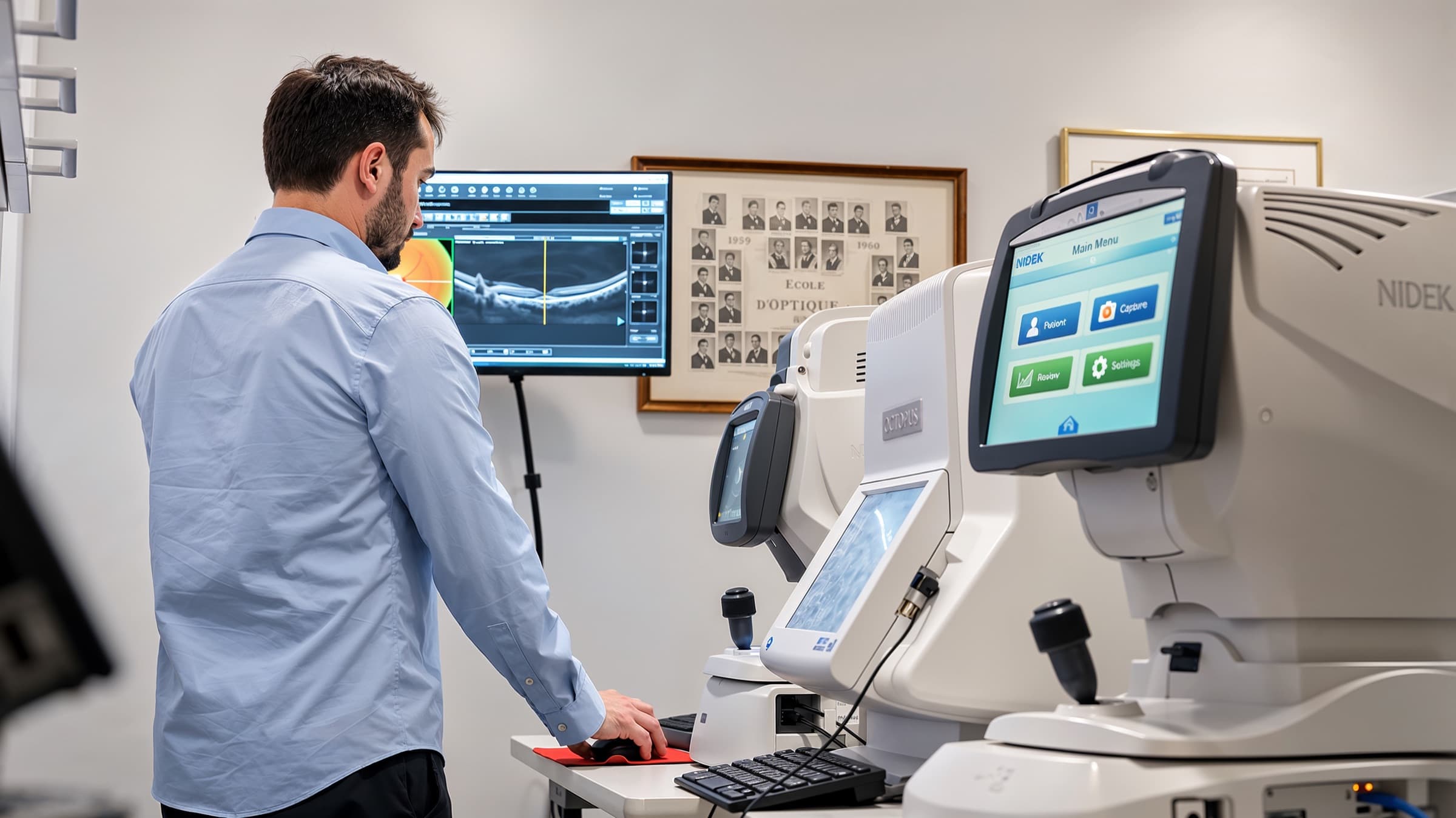
One of our three optometrists, all members of the Ordre des optométristes du Québec, examines your eye under a microscope (slit lamp) to find the cause of the redness. If needed, our imaging equipment, including OCT, lets us see deeper into the eye.
3
You leave with a treatment plan
We explain what we found and recommend the right treatment plan and follow-up. If ophthalmology care is needed, we manage the referral to the right specialist.
Fees may apply for the exam, treatment or imaging, and we explain them before any care.
See our exam equipmentCommon questions about pink eye
How long does pink eye last?
Viral pink eye clears up on its own, usually in 1 to 3 weeks. Bacterial pink eye varies a lot depending on the bacteria, and allergic pink eye usually clears up once you remove what triggers it. An eye exam is the best way to know what you have and what to expect.
How can I tell if my pink eye is viral or bacterial?
The discharge is a first clue: clear and watery for a virus, thick, yellowish or greenish for bacteria. But the symptoms look a lot alike, so a correct diagnosis is critical: see an optometrist to get the right diagnosis and management plan.
Is a red eye with no pain serious?
It depends. A red eye with no pain can be harmless, like a burst blood vessel (subconjunctival hemorrhage), but it can also be very serious. Have it assessed by an optometrist: only an eye exam can tell the difference.
Do I need antibiotics for pink eye?
Only if it's bacterial. Antibiotic drops or ointment have no effect on viral or allergic pink eye, the most common kinds, and using them for no reason won't speed up healing. That's why an eye exam comes before a prescription: in Quebec, your optometrist can prescribe them if needed. Don't use someone else's drops or leftovers from a past infection.
My child has pink eye. Can they go to daycare?
It depends on the cause and on your daycare's rules: for bacterial pink eye, most ask for 24 hours of antibiotic drops before a child returns. Allergic pink eye isn't contagious.
Important: for a baby under one month old, a red, swollen eye or one with pus needs to be seen by a doctor the same day.
Can I wear contact lenses with pink eye?
No. Wear your glasses until you're fully healed, and throw away the disposable lenses and case you used when symptoms started. If you have sharp pain, call us right away: for a contact lens wearer, a painful eye can signal an infection or an ulcer on the cornea.
Pink eye or stye: how do I tell the difference?
Pink eye turns much of the white of the eye red, often with discharge or a stinging feeling. A stye is a small red bump, warm and tender, on the edge of the eyelid at the base of a lash, like a pimple.
Worried about a red eye?
An eye exam is the best way to find the cause of a red eye and get appropriate care. Walk-ins welcome: call us before you come in so we can see you quickly, often the same day.